Tipping Both Ends: How Delivery Apps Built a Toll Booth Between You and Your Pad Thai
Somewhere in America right now, a small restaurant owner is staring at a DoorDash payout statement and doing the kind of math that makes people consider different careers. She cooked the food. She bought the ingredients. She paid the staff. And after the platform took its cut, she netted roughly enough to cover the electricity bill for the fryer.
Meanwhile, in a glass tower in San Francisco, a delivery app executive is presenting Q3 earnings to investors and using the word ecosystem a lot.
Welcome to the gig economy's most successful protection racket — one that charges restaurants to exist, charges you to eat, and takes credit for the whole transaction.
The Commission Nobody Talks About at the Table
Let's start with the number the apps prefer you not think about while you're browsing photos of burritos: the commission rate. DoorDash, Uber Eats, and Grubhub typically charge restaurants anywhere from 15% to 30% of every order placed through their platforms. Some contracts push higher. Some smaller restaurants, desperate for visibility, have reported rates closer to 35%.
On a $50 order, that's up to $17.50 gone before the restaurant pays its kitchen staff, its rent, its food costs, or its own taxes. The average independent restaurant in the U.S. operates on a profit margin of 3% to 9%. You do that math. It doesn't work. It was never designed to work.
So restaurants did what any rational business does when a middleman eats their margin: they raised prices. Studies have found that menu prices on delivery apps run 15% to 25% higher than the same items ordered in-person or direct. Some restaurants maintain entirely separate menus for app platforms — not because the food is different, but because it has to be priced differently just to survive the commission extraction.
You are, in other words, paying a hidden tax to a tech company every time you order delivery. It's just bundled into the price of the lo mein.
The Visibility Trap
Here's where it gets genuinely sinister: the apps don't just take a commission. They sell restaurants back their own customers.
On DoorDash and Uber Eats, restaurants can pay for premium placement — boosted visibility in search results, featured spots on the homepage, promoted listings in specific neighborhoods. This is, functionally, a second fee layered on top of the commission. Want to actually be seen by the people who are already on the app looking for exactly what you make? That'll cost extra.
The alternative — refusing to pay for promotion — means your restaurant gets buried by the algorithm beneath competitors who did pay. The platforms have built a system where organic visibility is a myth and paying to play is the only viable strategy. It's Google Ads, but for tacos, and the stakes are whether your family business survives the month.
Smaller restaurants without marketing budgets find themselves in a particularly cruel bind. They can't afford to promote. They can't afford not to be on the apps. And they definitely can't afford the commission. But opting out means losing access to the chunk of customers who've been trained — by the apps themselves — to never call a restaurant directly again.
The Customer Gets It Too
Let's be clear: the consumer is not getting a deal here either. You're just getting squeezed from a different direction.
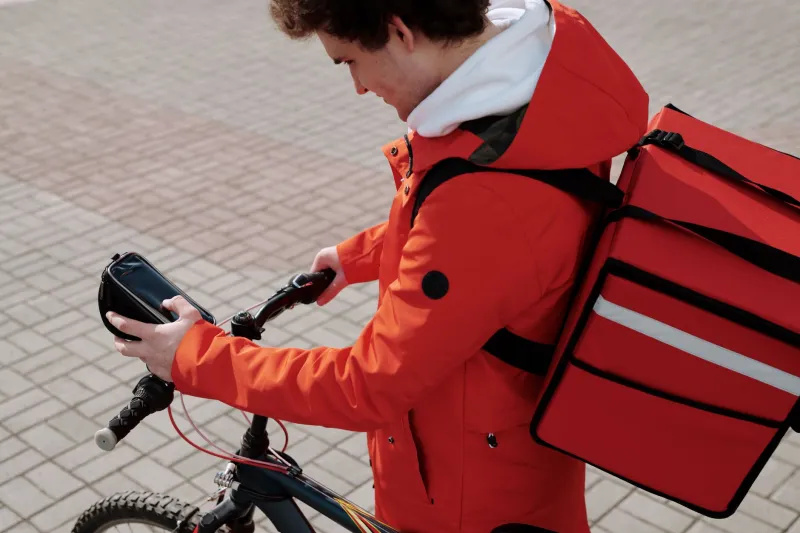
Beyond the inflated menu prices, there are delivery fees, service fees, small order fees, and the increasingly aggressive nudge toward tipping the driver before you even know if the food arrived. A $14 sandwich can become a $26 transaction by the time the app is done with you. And the driver, for the record, is often clearing $3 to $5 on that delivery after expenses — another victim of the same platform extracting value from everyone in the chain except itself.
The apps justify their fees with the language of logistics and technology and connecting consumers with local businesses. What they've actually built is a dependency loop: they spent years subsidizing cheap delivery to hook both restaurants and consumers, drove the habit deep into American culture, and then — once the behavior was locked in — started tightening the screws on pricing. Classic platform economics. Get everyone addicted first. Charge whatever you want later.
Ghost Kitchens: The Endgame
The logical conclusion of this whole arrangement is already visible if you know where to look. It's called the ghost kitchen, and the delivery apps love it.
A ghost kitchen is a restaurant with no dining room, no storefront, no neighborhood presence — just a commercial kitchen cranking out food exclusively for delivery. Some delivery platforms have started operating their own ghost kitchen facilities, renting space to restaurants or running their own proprietary brands. DoorDash has its own virtual restaurant concepts. Uber Eats has experimented with similar models.
Think about what that means. The platform that charges restaurants to access customers is now also becoming a restaurant. The referee bought a team. The toll booth operator opened a competing highway. The conflict of interest is so naked it barely qualifies as a conflict — it's just a declaration of intent.
What You Can Actually Do
Ordering direct is the most obvious move and the one the apps have spent billions training you not to do. Most restaurants have their own websites. Many use third-party ordering systems that charge far lower commissions — or take phone orders the old-fashioned way. Calling ahead and picking up your food yourself cuts the platform out of the equation entirely and often saves you $8 to $12 on a single order.
If you must use an app, Grubhub, DoorDash, and Uber Eats all offer varying commission tiers depending on a restaurant's contract — and some restaurants have negotiated better deals than others. But you won't know which ones. That information isn't disclosed to you. Transparency, as it turns out, is not part of the product.
Local restaurant associations in cities like Chicago, New York, and Los Angeles have lobbied — with mixed success — to cap delivery app commissions. During COVID-19, many cities imposed temporary caps of 15%. Most of those caps have since expired, and the platforms resumed their standard rates with the quiet efficiency of a meter clicking back on.
The Bill Always Comes Due
There is a version of American food culture where the neighborhood restaurant survives, where the person who spent twenty years learning to make exceptional dumplings gets to keep making them, and where convenience doesn't require a 30% tribute to a venture-capital-backed intermediary.
We are not currently living in that version.
What we have instead is a system engineered to extract maximum value from both ends of a transaction while contributing nothing to the food itself — no cooking, no sourcing, no craft, no culture. Just an app, an algorithm, and a commission structure that would make a loan shark blush.
Next time the total at checkout makes you wince, remember: you're not paying for convenience. You're paying for the privilege of funding a platform that's slowly eating the restaurants you love.
Bon appétit.