Ghost Landlords: The Hedge Fund Haunting Your Neighborhood
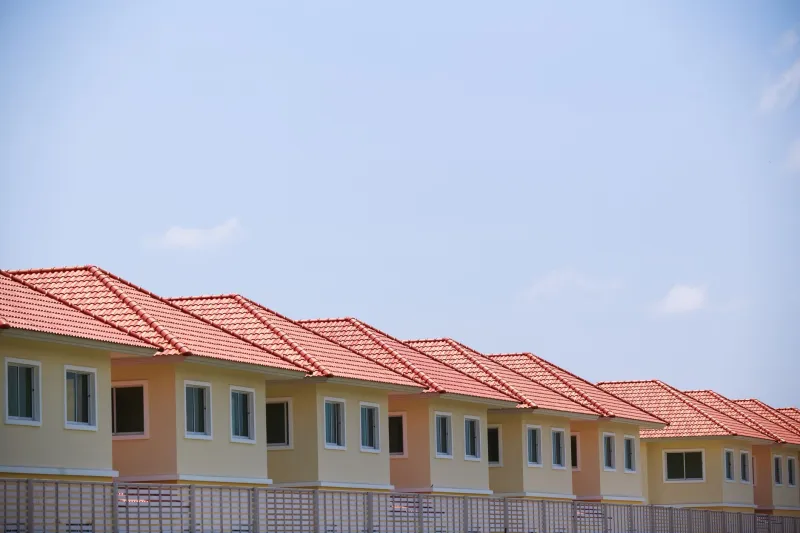
There is a particular kind of house that has started appearing in American neighborhoods with unsettling frequency. It looks fine from the outside — maintained just enough to avoid municipal citations, not enough to suggest anyone actually lives there with any emotional investment in the place. The lawn gets mowed on a schedule. The gutters are clear. The lockbox on the front door gets swapped out every few years.
Nobody you can name owns it. Nobody you can call lives in it. But somebody is absolutely collecting rent on it, and that somebody is almost certainly not a person.
The Quiet Acquisition
Beginning in earnest after the 2008 financial crisis — when millions of foreclosed homes hit the market at distressed prices — and accelerating dramatically through the pandemic-era housing frenzy of 2020 to 2022, institutional investors have purchased single-family homes across the United States at a scale that has no historical precedent.
Invitation Homes, the country's largest single-family rental company, owns approximately 80,000 homes. American Residential Properties, Progress Residential, FirstKey Homes — the roster of institutional landlords reads like a prospectus for a new American feudalism. Collectively, these entities and the private equity funds that seed them have acquired hundreds of thousands of homes that, in a previous era, would have been sold to first-time buyers building equity over thirty years.
Instead, they are now revenue-generating nodes in a portfolio. They will not be sold. That is the point.
The Shell Company Labyrinth
Try to find out who owns the rental house in your neighborhood. Seriously, try. You will navigate a maze of limited liability companies, each named with the inspired creativity of a law firm billing by the hour — "Cerberus SFR Holdings III LLC," "Vinebrook Homes Trust," "Progress SPE Borrower 2021-1 LLC." Each shell points to another shell, which points to a Delaware holding company, which points to a fund managed by a private equity firm whose actual principals are, for all practical purposes, invisible.
This structure is not accidental. It is a deliberate architecture of opacity that serves several simultaneous purposes: it limits liability, obscures the true scale of ownership from regulators and journalists, and makes it nearly impossible for tenants to identify a human being to hold accountable when the heat stops working in February.
The tenant's lease is with an LLC. Their maintenance requests go to a property management intermediary. Their rent is processed through a third-party payment portal. The actual economic beneficiary of their monthly payment is somewhere at the end of a chain of financial instruments that would require a securities attorney to fully untangle.
What Happens to a Neighborhood When Nobody Owns It
The economic consequences of institutional ownership are well-documented at this point, even if the political will to address them remains conspicuously absent. Studies examining markets with high concentrations of institutional single-family rentals have found consistent patterns: rents in those markets rise faster than comparable markets, homeownership rates among younger and lower-income residents decline, and the social fabric of neighborhoods — the thing urban planners call "social capital" and the rest of us call "knowing your neighbors" — frays visibly.
This makes sense when you think about the incentive structure. A homeowner has reasons to invest in their property and their community beyond pure financial return. They live there. Their kids go to school there. Their property value is tied to the neighborhood's overall health in ways that create genuine alignment between individual interest and collective wellbeing.
A fund has exactly one interest: return on investment. When the algorithm says raise rents, rents go up. When the algorithm says defer maintenance, maintenance gets deferred. When the portfolio model says exit a market, houses get sold — sometimes all at once, to another fund, without any of the tenants being meaningfully consulted.
The Eviction Machine
Institutional landlords have also industrialized the eviction process in ways that smaller landlords simply cannot match. Companies like Invitation Homes have faced documented accusations — including in a 2022 Federal Trade Commission complaint — of systematically charging junk fees, filing eviction notices as a collections tactic before lease violations are even formally established, and using the threat of eviction as leverage to extract fee payments from tenants who have nowhere else to go.
The asymmetry here is staggering. On one side: a tenant, probably working-class, probably without legal counsel, facing the loss of their home. On the other: a corporation with an in-house legal team, a property management software system optimized for collections, and a business model that has already accounted for eviction costs as a line item in its operating budget.
Eviction is not a failure state for these companies. It is a feature.
The Policy Void Where Accountability Should Be
Congress has made occasional gestures toward addressing institutional ownership. The Stop Wall Street Landlords Act has been introduced — and has gone nowhere — more than once. A handful of states have passed or proposed legislation requiring disclosure of institutional ownership, limiting bulk purchases, or providing tenants with right-of-first-refusal when a home is sold.
These efforts are real, and the people behind them are genuinely trying. But the lobbying apparatus of the real estate investment industry is substantial, well-funded, and operating in a political environment where housing is still largely understood as a local zoning issue rather than a national financialization crisis.
Meanwhile, the purchases continue. The portfolios grow. The shell companies multiply.
The Homeownership Dream, Foreclosed
There is something almost poetic, in a bleak way, about the timeline here. The 2008 financial crisis — caused in significant part by the financialization of mortgage debt — destroyed the homeownership prospects of millions of Americans through foreclosure. The distressed homes that resulted were then purchased at scale by institutional investors, who converted them into rental properties. Those renters are now unable to save for down payments because their rent keeps rising. And the homes they might have bought are being snapped up by the same class of financial actors before they ever hit the retail market.
It is a complete loop. The same financial system that burned down the house is now charging you rent to live in the ashes.
Your neighborhood is not a community to these funds. It is a line item. And until the regulatory framework catches up to the reality of what has happened to American housing, the ghost landlords will keep collecting, keep deferring, and keep raising the rent on the American dream they helped make unaffordable.