Same Stuff, Shiny New Wrapper: How Brands Engineered the Illusion of the Upgrade
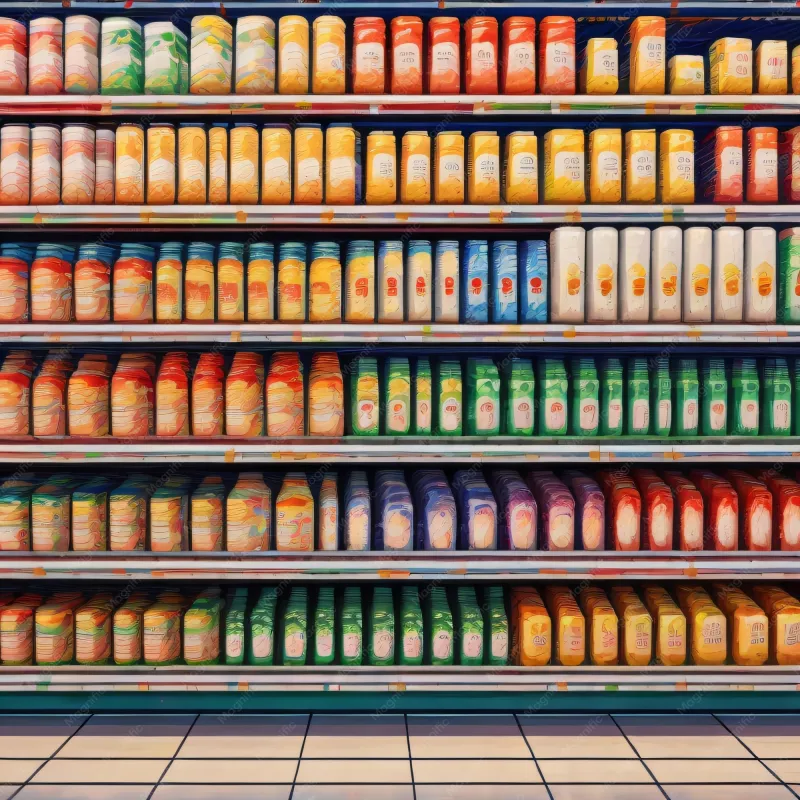
Photo: consumer products repackaged different branding same product shelf, via img.freepik.com
Somewhere in a conference room that smells faintly of cold brew and desperation, a brand manager is staring at a spreadsheet and asking a question that will cost you money: How do we get them to buy this again?
Not a new product. Not an improved formulation. Not a genuine innovation of any kind. Just the same item, dressed differently, priced higher, marketed with the urgency of a moon landing.
This is shrinkflation's less-discussed evil sibling — the rebrand scam — and it has quietly become one of the most profitable strategies in American consumer goods. While the internet has grown reasonably good at catching companies shrinking the bag of chips, far less attention has been paid to the companies that kept the bag the same size and just convinced you it was a completely different chip.
The Reformulation Shuffle
Let's begin with the most technically sophisticated version of this con: the "reformulation."
A reformulation is, in theory, a genuine improvement to a product's ingredients, performance, or safety profile. In practice, it is frequently a cost-cutting measure wearing the costume of innovation. Companies replace a more expensive ingredient with a cheaper one, adjust ratios to reduce the amount of the costly component, and then announce the change not as "we made this worse to save money" but as "NEW AND IMPROVED FORMULA."
The personal care industry is a serial offender. Haircare brands routinely launch "advanced" or "pro" versions of existing shampoos that contain lower concentrations of the active ingredients that made the original product effective, while adding a new fragrance and a new bottle with angular geometry. The consumer who notices their hair looks different is told they must be "experiencing a transition period." The consumer who doesn't notice keeps buying it at a 30% markup.
Beauty industry analyst Vicky Tsai has documented dozens of cases where flagship skincare products were quietly reformulated — with retinol concentrations reduced, peptide complexes simplified, or preservative systems cheapened — in the years following a price increase. The brand never announces this. The packaging says "same great formula." The formula is not the same.
The Celebrity Rebrand Industrial Complex
Then there is the celebrity-endorsed rebrand, which operates on a different but equally cynical logic: if you can't improve the product, improve the face attached to it.
Stanley cups are a particularly elegant case study. Stanley, a company that had been making vacuum-insulated drinkware since 1913, saw its core tumbler product flatline in the market for years. In 2019, a group of female lifestyle bloggers called The Buy Guide began organically promoting the product to their audience. Stanley, recognizing an opportunity, leaned in — partnering with influencers, launching pastel colorways, and repositioning the product from "rugged outdoor gear" to "emotional support water bottle for women."
The cup did not change. The price went from roughly $35 to $55. The product became a cultural phenomenon, a status symbol, and eventually a limited-edition commodity that people were lining up outside Target at 5 a.m. to purchase. Stanley's annual revenue reportedly jumped from $73 million to over $750 million between 2019 and 2023.
The cup. Did not. Change.
This is not a criticism of Stanley specifically — they executed a legitimate marketing pivot with considerable skill. It is, however, a very clear illustration of how the idea of a product can be completely reconstructed around an identical physical object, with consumers paying a premium not for anything material but for a story.
The Name Change Shell Game
Worse than the reformulation is the outright renaming — the practice of discontinuing a product, letting the negative reviews age off the internet, and relaunching the identical item under a new name at a higher price point.
The mattress industry has made this an art form. Given the extreme difficulty of comparing mattresses across brands (they're almost never sold under the same name at different retailers, a practice that is itself deliberate), companies routinely retire a model that has accumulated poor reviews and relaunch it as a new product in their lineup. The internal components are unchanged. The coil count is unchanged. The foam density is unchanged. The name is different, the price is 20% higher, and the one-star reviews about the sagging center are nowhere to be found because they were attached to the old name.
The FTC has investigated this practice in the mattress sector specifically, finding that several major brands maintained what amounted to parallel naming systems — one name for Costco, one for Mattress Firm, one for the direct-to-consumer website — making price comparison structurally impossible. This is not a bug. It is the entire strategy.
The "Premium" Tier That Isn't
Perhaps the most pervasive version of the rebrand scam is the fake premium tier — a product that is physically identical (or worse) than the standard version, differentiated only by packaging, positioning, and price.
Grocery store private labels have long operated on the inverse of this principle: same factory, different label, lower price. But the premium rebrand runs it backwards. Major food conglomerates routinely launch "artisan," "small batch," or "craft" sub-brands that are manufactured in the same industrial facilities as their flagship products, using the same ingredients, through the same processes, and sold at a 40–60% premium.
ConAgra's Alexia brand, Unilever's Sir Kensington's, Campbell's Pacific Foods — these are not small independent companies that got acquired. They were built to look like small independent companies, complete with origin stories, hand-drawn logo aesthetics, and the verbal tics of craft food culture. The manufacturing reality is a 200,000-square-foot processing plant in Iowa.
How to Stop Being the Mark
The rebrand scam is harder to catch than shrinkflation precisely because it operates on perception rather than measurement. You can weigh a bag of chips. You cannot easily weigh the cultural value a brand has manufactured around an unchanged product.
A few practical defenses exist. Browser extensions like Honey and Camelizer track price histories, which can reveal when a "new" product launched at a price that seems oddly similar to a recently discontinued one. Ingredient comparison sites for personal care products — CosDNA and INCIDecoder among them — allow you to compare formulations across product generations. And the old practice of photographing the ingredient list before a product gets "improved" is, genuinely, worth doing for anything you use regularly.
But the deeper fix is cultural: we have to stop treating novelty as a proxy for value. The new packaging is not evidence of a better product. The celebrity face is not evidence of a superior formula. The angular bottle is not evidence of advanced engineering.
Sometimes the best version of the thing was the version they already sold you. They just need you to forget that.