The $1,200 Refrigerator That's Already Dying on Your Kitchen Floor
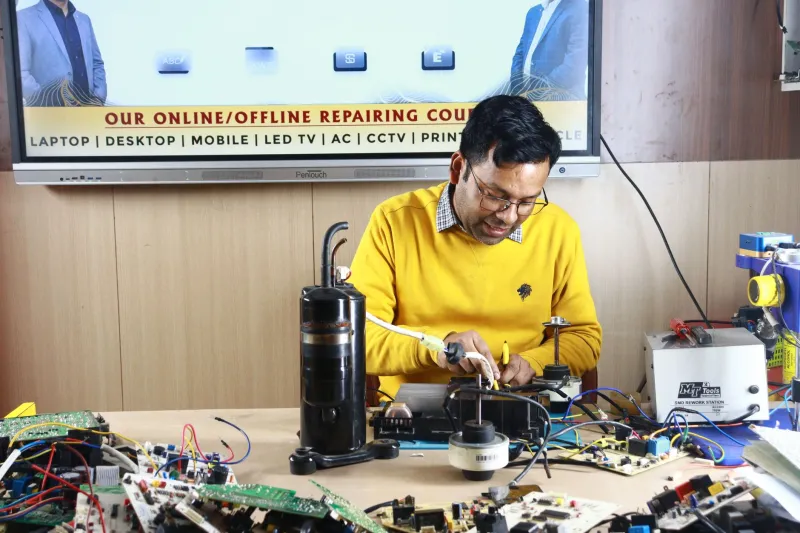
Somewhere in a landfill outside of Houston, there is a perfectly functional refrigerator compressor attached to a refrigerator that stopped working because a $12 control board failed and the manufacturer discontinued the part eighteen months after the unit shipped. The compressor will outlast the landfill. The appliance is dead anyway.
Welcome to Planned Obsolescence 2.0 — same corporate contempt for the consumer, now with Bluetooth connectivity and a subscription fee.
Your Appliance Has an Expiration Date. You Just Don't Know It Yet.
There's a useful piece of industry jargon that appliance manufacturers prefer you never encounter: "engineered product lifespan." It is exactly what it sounds like. The longevity of your washing machine, your dishwasher, your smart oven, your $400 robot vacuum — these are not natural outcomes of material science and honest engineering. They are decisions. Made by people. In meetings. With spreadsheets.
The refrigerators your grandparents owned lasted 25 to 30 years. The average lifespan of a refrigerator sold in the United States today is somewhere between 10 and 15 years, and that number is trending downward. Your parents' Maytag was built to run. Your LG InstaView is built to be replaced.
This is not an accident. It is a business model.
How They Do It: A Brief Tour of Corporate Sabotage
The modern appliance industry has developed a remarkably sophisticated toolkit for ensuring your stuff breaks on schedule. Let's walk through the greatest hits.
Proprietary parts and software locks. Your Samsung refrigerator's ice maker doesn't just need a replacement motor when it fails. It needs a Samsung-certified replacement motor, purchased through Samsung's parts ecosystem, ideally installed by a Samsung-authorized technician. The part costs four times what a generic equivalent would cost. The technician charges $150 just to walk through your door. This isn't about quality control. It's about cornering the repair market.
John Deere pioneered the software-lock playbook in agricultural equipment — farmers found themselves unable to fix their own tractors in the middle of harvest season without a dealer-issued diagnostic code — but the strategy has migrated thoroughly into home appliances and consumer electronics. Your Whirlpool smart oven's control software is proprietary. Your Nest thermostat's repair pathway runs exclusively through Google's service infrastructure. Your iRobot Roomba will, at some point, receive a firmware update that makes it functionally incompatible with third-party replacement batteries.
Deliberately fragile components. Consumer Reports has documented a consistent pattern in appliance engineering over the past two decades: the parts most likely to fail are, with suspicious regularity, the parts most difficult and expensive to replace. Control boards. Touch-screen interfaces. Proprietary connectors. These are not the components most subject to mechanical wear. They are, however, the components that trigger a repair estimate that makes buying new look rational by comparison.
The unrepairable design. Ever tried to replace the door seal on a modern front-load washing machine? Many current models require removing the entire front panel, the drum assembly, and several components that were clearly designed to be assembled once and never touched again. YouTube repair channels — which have become an accidental consumer protection institution — are full of videos of engineers and DIY enthusiasts staring at appliance guts and quietly saying things that can't be printed here.
The Smart Home Trap
Here's where it gets truly contemporary: the "smart" appliance category has added an entirely new dimension of planned obsolescence that previous generations of manufacturers could only dream of.
A traditional appliance breaks when a physical component fails. A smart appliance can be rendered obsolete by a server going offline. When Google discontinued its Works with Nest program in 2019, thousands of smart home devices that depended on that ecosystem lost core functionality overnight. When Insteon, a major smart home platform, abruptly shut down in 2022, users' devices — devices they had purchased and installed in their homes — stopped working. Not because anything physically broke. Because a company decided to stop running the servers those devices depended on.
This is the logical endpoint of the internet-connected appliance: your refrigerator now has a software dependency, and that dependency has a business model attached to it. Samsung's Family Hub refrigerators, which retail for north of $3,000, run on a proprietary operating system that Samsung controls. When Samsung stops supporting that OS — and they will, eventually, because they always do — you will own a very expensive insulated box with a broken touchscreen.
The Environmental Cost Nobody Wants to Calculate
Here's the number the appliance industry doesn't advertise: Americans discard roughly 9 million tons of appliances and electronics annually. The EPA estimates that less than 25% of that material is properly recycled. The rest ends up in landfills, or in informal recycling operations in countries with significantly looser environmental regulations, where the process of extracting valuable metals from circuit boards involves burning procedures that release dioxins and heavy metals into communities that did not buy the appliance and did not benefit from its sale.
The environmental cost of manufacturing a new refrigerator — the mining, the smelting, the fabrication, the shipping — is enormous. When that refrigerator is designed to last ten years instead of twenty-five, that manufacturing cost is effectively doubled. The carbon footprint isn't a side effect of planned obsolescence. It's a feature the industry has successfully externalized onto the planet.
The Right-to-Repair Movement Is Fighting Back (Slowly)
The good news — there is some — is that the right-to-repair movement has been chipping away at this architecture with genuine legislative momentum.
As of 2023, Colorado passed a right-to-repair law for agricultural equipment. California passed digital right-to-repair legislation covering consumer electronics. Minnesota enacted a broad right-to-repair bill covering everything from wheelchairs to home appliances. The FTC, under the Biden administration, formally recognized repair restrictions as an anticompetitive practice and began enforcement actions.
The appliance and electronics lobby has spent tens of millions of dollars fighting these measures at the state level, arguing — with a straight face — that allowing consumers to repair their own property represents a safety hazard. The safety hazard, apparently, is to their service revenue.
What to Do Before Your Next Appliance Dies
Until federal right-to-repair legislation passes — which requires the kind of sustained consumer pressure that corporations spend a great deal of money preventing — here are some practical moves.
Before purchasing any appliance, search the model number plus "parts availability" and "repair forum." If the repair community is thin or the parts are proprietary, that's information. Buy the extended warranty only after reading every exclusion clause. Consider purchasing refurbished appliances from certified rebuilders, who often use older, more repairable designs. Support right-to-repair legislation in your state — iFixit maintains a live tracker at repair.org.
And the next time a salesperson tells you your new smart refrigerator will "change how your family interacts with food," remember: it will also change how your family interacts with repair bills.
That part doesn't make the brochure.