Flush Money Down the Drain: The Supplement Industry's $100 Billion Con Job
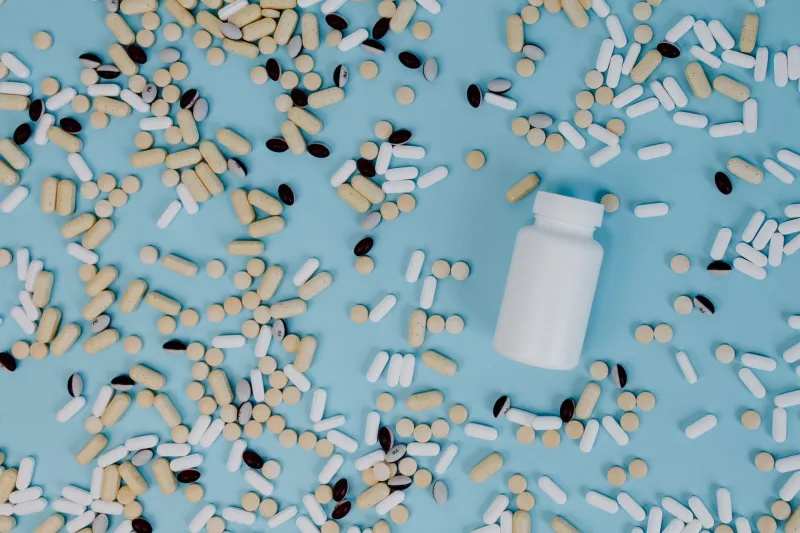
Somewhere in America right now, a very attractive person with excellent lighting is holding a translucent amber bottle and explaining, with complete sincerity, that this particular blend of ashwagandha, lion's mane mushroom, and "bioavailable" something-or-other will fix your gut, sharpen your focus, balance your hormones, and probably save your marriage. The bottle costs $79. It contains 30 servings. And according to a growing body of clinical research, your body is going to take one look at most of it and flush it directly into the municipal water supply.
Welcome to the Wellness Industrial Complex — a $100 billion-per-year machine built on health anxiety, regulatory loopholes, and the uniquely American belief that if a doctor won't prescribe it, some guy named Chad on YouTube definitely will.
The FDA Looked the Other Way (Because Congress Told It To)
Let's start with the foundational scam, the one that makes all the other scams possible. In 1994, Congress passed the Dietary Supplement Health and Education Act — a piece of legislation so friendly to the supplement industry that it might as well have been written on the back of a protein powder tub. DSHEA essentially told the FDA: hands off. Under this law, supplement manufacturers do not need to prove their products are effective before selling them. They don't even need to prove they're safe. The burden of proof flips entirely — the FDA has to demonstrate a product is dangerous before it can pull it from shelves.
The result? A market where approximately 80,000 supplement products are available to American consumers, and the FDA has the resources and legal authority to meaningfully scrutinize roughly a tiny fraction of them. Manufacturers can slap "supports immune health" or "promotes cognitive function" on a label without producing a single peer-reviewed study, as long as they include the fine-print disclaimer that the FDA hasn't evaluated these claims. That disclaimer, printed in type roughly the size of a gnat, is the industry's legal get-out-of-jail-free card.
Your Bloodstream Is Not Impressed
Here is where the biology gets inconvenient for the wellness crowd. Many vitamins and supplements — particularly fat-soluble ones taken in excess, and the entire extended family of B vitamins — are simply excreted when your body already has sufficient levels. If you're eating a reasonably varied diet and you take a high-dose multivitamin, you are, in the most literal sense, producing expensive, neon-yellow urine. Nutritionists have a term for this. They call it "expensive pee." The supplement industry calls it "your 30-day supply."
This isn't fringe science. The National Institutes of Health's own Office of Dietary Supplements acknowledges that for most healthy adults eating a balanced diet, supplementation provides minimal to no measurable benefit for the majority of products on the market. Large-scale clinical trials on popular supplements like echinacea, glucosamine, ginkgo biloba, and a parade of antioxidant megadoses have repeatedly returned results ranging from "no effect" to "actively counterproductive." A landmark study found that high-dose beta-carotene supplements actually increased lung cancer risk in smokers. The industry's response to inconvenient data is consistent and practiced: change the subject, pivot to a new ingredient, and find a new influencer.
The Influencer-to-Supplement Pipeline Is a Closed Loop of Nonsense
If you want to understand how a product with no clinical evidence ends up in 4 million medicine cabinets, follow the money from the brand to the creator. The modern supplement marketing machine runs almost entirely on affiliate codes, gifted products, and paid partnerships that are disclosed — when they're disclosed at all — in text so small and brief it registers as background noise. A fitness influencer with 800,000 followers posts a morning routine video. She mentions, casually, that she starts every day with a specific collagen peptide powder. The comment section fills with questions. She drops a discount code. The brand pays her per conversion. Nobody in this transaction is a doctor. Nobody is required to be.
Celebrity involvement turbocharged this dynamic. Gwyneth Paltrow's Goop turned wellness pseudoscience into a luxury lifestyle brand and proved that if you package unproven health claims in enough beige linen, the FTC will write you a strongly-worded letter and you'll pay a settlement that amounts to a rounding error in your quarterly revenue. Goop settled FTC complaints over misleading health claims for $145,000 — a sum that wouldn't cover the brand's annual candle budget.
The Anxiety Economy
The supplement industry doesn't just sell pills. It sells a specific emotional experience: the feeling that you are doing something, that you are not helpless against the grinding machinery of modern stress, environmental toxins, processed food, and a healthcare system that gives you eleven minutes with a physician and a $400 copay. That feeling is worth a great deal to people, and the industry knows it.
Marketing language in the supplement space is engineered to exploit precisely this vulnerability. Products don't treat conditions — they "support" systems. They don't cure anything — they "optimize." They don't make medical claims — they make lifestyle claims that gesture meaningfully at medical claims while technically staying on the right side of the law. "Supports a healthy inflammatory response" is not the same as "reduces inflammation," but your brain, skimming a bottle at Whole Foods while mildly anxious about your cholesterol, does not always register the distinction.
The anti-establishment framing is particularly insidious. Wellness brands routinely position themselves as the truth the medical industry doesn't want you to know. "Doctors won't tell you this" is a sentence that has sold more supplements than any clinical trial ever could. It converts scientific skepticism — a reasonable response to unproven products — into evidence of conspiracy. If the research doesn't support it, that's because Big Pharma suppressed the research. This is a closed epistemic loop that happens to be extraordinarily profitable.
What You Can Actually Do
None of this means every supplement is useless. Vitamin D deficiency is genuinely common in northern latitudes and among people with limited sun exposure. Folate matters enormously during pregnancy. Iron supplementation is legitimate for people with diagnosed deficiencies. The operative phrase in every case is diagnosed deficiency — meaning a blood test, a doctor, and an actual clinical reason to supplement rather than a TikTok video and a vague sense that you feel tired sometimes.
If you're determined to spend money in this space, look for products that carry third-party certification from organizations like USP, NSF International, or ConsumerLab — outfits that at least verify the product contains what the label claims. It's a low bar, but in this industry, it's the bar that exists.
The harder ask is this: the next time a wellness brand tells you their proprietary mushroom blend will unlock your body's full potential, consider that your body's full potential does not require a subscription. It requires sleep, vegetables, movement, and the radical act of not giving $79 a month to a company whose primary clinical evidence is a before-and-after photo of someone who also started going to the gym.
Your kidneys will thank you. They're already working overtime.