Size Doesn't Matter Anymore — and That's Exactly the Point
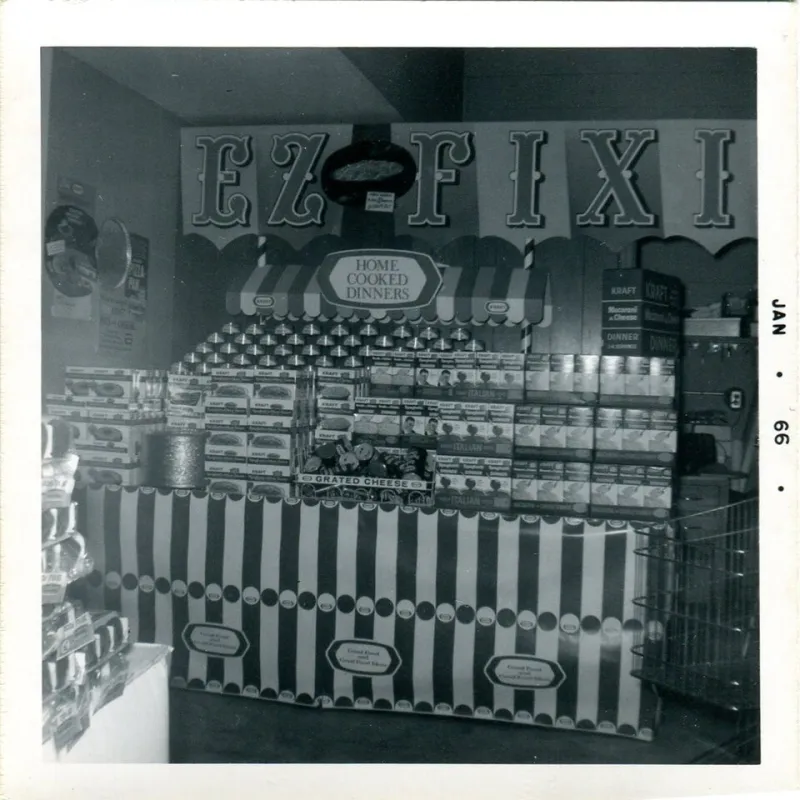
Photo: Gay Hoover, CC BY-SA 4.0, via Wikimedia Commons
Quiz time. Which is the better deal: a 19.3-ounce box of cereal for $4.79, or a 24-ounce box for $5.89? Take your time. The people behind you in the checkout line are definitely not sighing.
If you got out your phone to calculate the per-ounce price — and had to do it twice because the first time you hit the wrong button — congratulations, you just experienced the core mechanic of one of the most successful consumer manipulation strategies in modern retail history. The correct answer, by the way, is the larger box. But the margin is so thin, and the mental effort so high, that a significant percentage of shoppers just grab the one that feels right and move on. That feeling costs them real money, every single week, for their entire adult lives.
This is not shrinkflation — though shrinkflation is real and it's also happening to you. This is something subtler and, in some ways, more insidious. Call it size chaos. Call it metric fog. Call it what it is: the deliberate elimination of standard units as a competitive strategy.
The Death of the Pound
There was a time when a bag of coffee weighed a pound. Not because of some federal regulation, just because a pound was a unit of measurement humans had agreed upon and it was a sensible amount of coffee. Then, sometime in the early 2000s, coffee bags started quietly shrinking. First to 13 ounces. Then 12. Then 11.5. Then 10.7, which is a number that appears to have been chosen specifically to make comparison impossible.
Here's the thing: none of these sizes correspond to each other, to competitors' sizes, or to any unit of measurement with cultural resonance. You cannot eyeball 10.7 ounces. You cannot compare it to anything. The only way to know if you're getting a good deal is to calculate the price per ounce, which requires you to know the weight (printed in small type on the back), the price (which may or may not be on the shelf tag), and the ability to do division while a toddler is asking you about dinosaurs.
Paper towels have undergone the same treatment. The "regular roll" no longer exists as a meaningful unit. You have Double Rolls, Triple Rolls, Mega Rolls, Select-A-Size Mega Rolls, Big Plus Rolls, and what one brand actually called a "Gigantic Roll," as if naming it with sufficient enthusiasm would distract from the fact that the sheet count per roll has been declining for a decade. A "Double Roll" from Brand A contains a different number of sheets than a "Double Roll" from Brand B. The word "double" means nothing. It is decorative.
Cognitive Load Is the Product
Behavioral economists have a term for what happens when your brain is asked to process too many variables simultaneously: cognitive overload. When you're cognitively overloaded, you fall back on heuristics — mental shortcuts. You grab the familiar brand. You go with the bigger-looking package. You trust the one with "Value" in the name. You buy whatever's at eye level.
Retail planners know this. Consumer packaged goods companies know this. The proliferation of non-standard sizes isn't a supply chain accident or a manufacturing quirk. It is a deliberate strategy to trigger cognitive overload at the point of purchase, at which point your decision-making reverts to the shortcuts that companies have spent billions of dollars in marketing to install in your head.
A 2019 study in the Journal of Marketing Research found that consumers consistently underprice larger packages of goods when sizes are irregular, meaning they underestimate the per-unit value of buying bigger. Companies that sell in irregular sizes can therefore charge more per unit on smaller packages — which are often positioned as the "starter" or "trial" size — while consumers genuinely believe they're making a reasonable choice.
The study also found that when unit pricing was prominently displayed, the effect largely disappeared. Shoppers bought smarter. Which is why, despite unit pricing being legally required on shelf tags in most U.S. states, the type is often printed at a size that requires reading glasses, positioned at the bottom of the tag, and formatted inconsistently — sometimes per ounce, sometimes per 100 grams, sometimes per unit — making comparison between brands still maddeningly difficult.
The Grocery Store Is a Maze Built by Your Enemy
The modern American supermarket is not a neutral retail environment. It is an engineered decision architecture designed by people who have read the same behavioral economics research you haven't, implemented by companies with dedicated teams of consumer psychologists, and continuously refined based on sales data that tells them, with extraordinary precision, which shelf positions, package designs, and size configurations extract the most money per shopper visit.
Eye-level shelves are paid placements. End caps are paid placements. The items near the checkout — which you pass while mildly exhausted from navigating the maze — are paid placements. And the product sizes on those shelves are chosen not for consumer convenience but for competitive obscuration. If your 14.1-ounce package is impossible to compare to a competitor's 16-ounce package, you've effectively removed price competition from the equation. You've made shopping a guessing game. And in a guessing game, the house always wins.
The "New Size" Launch: A Masterclass in Misdirection
Watch for the "New Size" label, which is one of the most reliable signals that you're about to pay more for less. Companies have learned that launching a smaller package as a "new" product resets consumer price expectations. If the 16-ounce version disappears from shelves and is replaced by a "New 13-ounce" version at a slightly lower absolute price, many consumers register the lower price and miss the higher per-unit cost entirely.
This works even better when the new size comes with a redesigned package — taller, sleeker, more modern-looking — because the visual cues of "new and improved" override the mathematical reality of "smaller and more expensive per serving." The package gets a rebrand. The contents get a haircut. Your wallet gets a quiet mugging.
Fighting Back With Math They Don't Want You Doing
The most effective consumer tool against size chaos is also the most boring: unit price calculation. Most smartphones have calculators. The unit price on the shelf tag, however tiny and inconsistently formatted, is legally required to be there. Spending thirty seconds doing the math on a product you buy every two weeks can save real money over the course of a year.
Beyond individual vigilance, this problem has a structural solution: mandatory, standardized, prominent unit pricing on all consumer packaged goods, with consistent base units by category. Several European countries have implemented versions of this. American lobbying from the consumer packaged goods industry has, predictably, kept it off the federal agenda.
Until that changes, every trip to the grocery store is a math test administered by people who are rooting for you to fail. Bring a calculator. Read the small print. And when you see "New Size" on a package, know that the only thing that's new is how much they're charging you for less.