Three Digits, Zero Justice: The Credit Score Racket That Turns Being Poor Into a Lifetime Sentence
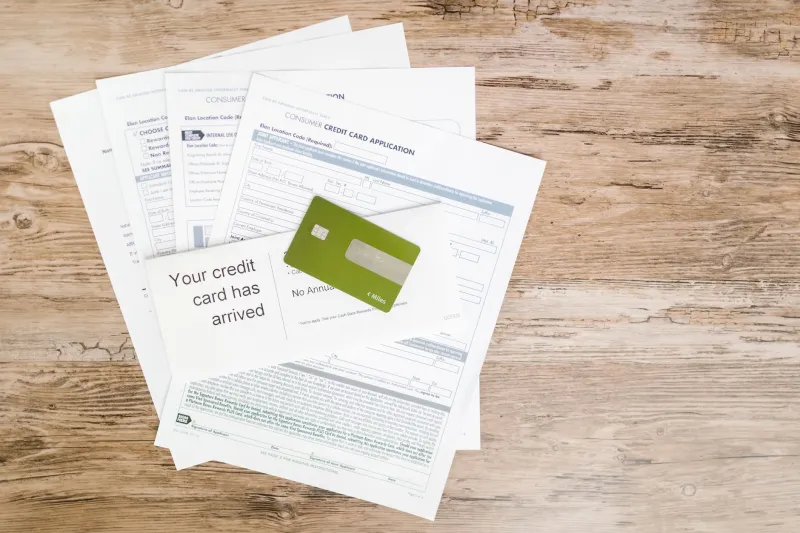
Picture this: you're 24, you had a rough year — medical bills, a layoff, maybe a landlord who reported a disputed charge — and now a number you've never chosen, never been taught to understand, and have almost no power to contest is quietly following you around like a debt collector with a clipboard. It whispers to your future landlord. It whispers to your employer. It whispers to your insurance company. And what it says, in each of those conversations, is: this person is a risk.
Welcome to the American credit score system, where poverty is a pre-existing condition and the cure costs more than you can afford.
The Three Companies That Own Your Financial Identity
Equifax, Experian, and TransUnion. Three private corporations — accountable to shareholders, not to you — hold the financial reputations of roughly 220 million Americans. They collect data about your borrowing habits, your payment history, your debt levels, and your credit inquiries, then package that data into a score that functions, in modern American life, as a shadow citizenship rating.
None of them were elected. None of them were appointed. You didn't sign a consent form to be in their databases. You were simply enrolled at birth into a system designed by lenders, for lenders, and then handed a score at adulthood and told: good luck.
The three bureaus generate roughly $50 billion annually in combined revenue. They sell your financial data to the same banks and creditors who reported it to them in the first place, completing a surveillance loop so elegant in its self-dealing that you almost have to admire it. Almost.
How the Score Is Engineered to Punish the Already-Punished
The FICO score — the dominant credit scoring model in the U.S. — is calculated across five categories: payment history (35%), amounts owed (30%), length of credit history (15%), new credit (10%), and credit mix (10%). On paper, this sounds reasonable. In practice, it is a system that systematically disadvantages people who are poor, young, or recovering from circumstances that were frequently not their fault.
Consider the "credit history length" component. To have a long credit history, you need to have had credit for a long time. To have had credit for a long time, you need to have been approved for credit when you were young. To have been approved for credit when you were young, you typically needed a parent or guardian who could co-sign or a financial institution willing to extend credit to someone with no history. If you grew up in a household that didn't have credit cards, didn't have a mortgage, or actively avoided debt for cultural or practical reasons, you start the game several moves behind.
Or consider the "credit utilization" component — the ratio of what you owe to what you're approved to borrow. If you have a $500 credit limit and carry a $400 balance because $400 was what rent cost this month and you needed to eat, you're being penalized for being poor in a month when you needed credit to function. The algorithm doesn't know you had an emergency. It sees utilization above 30% and docks your score accordingly.
The system is not measuring your financial character. It's measuring your financial cushion. And it's punishing you for not having one.
The Penalty APR on Poverty
Here's the cruelest arithmetic in American consumer finance: the worse your credit score, the higher the interest rate you pay on any debt you're approved for. The higher your interest rate, the harder it is to pay down that debt. The harder it is to pay down debt, the worse your credit score gets.
This is not a bug. This is the product.
A borrower with a credit score above 760 might qualify for a personal loan at 7% interest. A borrower with a score below 580 — if they can get approved at all — might face rates of 25% to 36%. Over the life of a loan, that difference can translate to thousands of dollars in additional interest, extracted from the person least able to afford it and transferred directly to the financial institution most able to profit from it.
The Consumer Financial Protection Bureau has documented this dynamic extensively. Low-income borrowers pay more for credit, more for insurance, and in some states, are even denied employment based on credit checks — meaning a bad credit score can literally prevent you from earning the income that would help you repair it. The trap doesn't just close on you. It locks from the outside.
The Error Rate Nobody Wants to Talk About
A 2021 Consumer Reports investigation found that 34% of Americans had at least one error on their credit reports. One in three. These errors ranged from minor clerical mistakes to accounts that didn't belong to the person at all — often the result of identity theft or, charmingly, the bureaus mixing up files between people with similar names.
Disputing these errors is a Kafkaesque experience that has driven consumer advocates to the brink of professional despair. You submit a dispute. The bureau "investigates" — which in practice typically means asking the creditor who reported the error whether the error is an error, and accepting their answer. If the creditor says it's accurate, the bureau marks the dispute as resolved. You can escalate to the CFPB, but enforcement is inconsistent and the process can take months, during which your damaged score continues to cost you money, housing, and opportunity.
The bureaus are not incentivized to fix their data. Accurate data doesn't generate additional revenue. Volume does.
The Reform Conversation We're Not Having
There are real alternatives being discussed — quietly, in policy circles, away from the lobbying apparatus that the credit industry has deployed to keep the status quo intact. Some advocates have proposed incorporating rent payment history into credit scores, which would benefit the tens of millions of Americans who pay rent on time every month but receive no credit score benefit for doing so. Others have pushed for the use of income and savings data as alternative creditworthiness indicators.
The Credit Reporting Agency Reform Act and similar legislative proposals have floated through Congress, aiming to give consumers more power to dispute errors, limit the use of credit scores in employment decisions, and impose real accountability on the bureaus. They face fierce industry opposition from institutions that have built $50 billion empires on the existing architecture of confusion and inequity.
Meanwhile, the number follows you. It shapes where you live, what you pay, and sometimes whether you work. It was assigned to you by an algorithm designed by lenders, maintained by corporations with no obligation to your wellbeing, and enforced by a market that has decided three digits constitute a complete picture of a human being's financial trustworthiness.
Your credit score is not your character. But as long as the industry can convince everyone else it is, they'll keep collecting the difference.