You Canceled Cable for This? The Streaming Bait-and-Switch That Bled You Dry
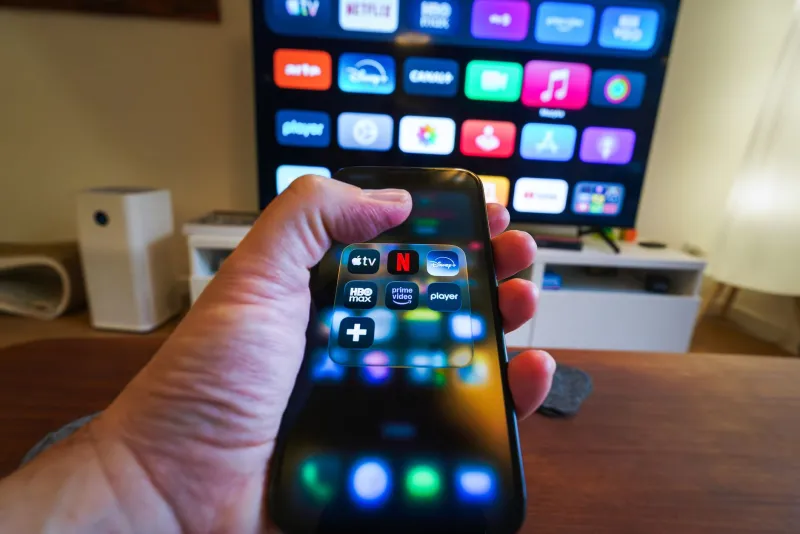
Remember the pitch? It was so clean, so righteous. Ditch the cable company — that bloated, price-gouging dinosaur charging you $180 a month for 400 channels you'd never watch — and embrace the glorious future of streaming. Your shows. Your schedule. No ads. No contracts. Just $8 a month and a password you'd share with your sister in Tucson.
That was the promise. Here's what actually happened.
The Seduction Phase (Or: How They Got You to Break Up With Cable)
Netflix launched its streaming service in 2007 at a price point so low it felt almost charitable. By the early 2010s, it had become the insurgent hero of American living rooms, and cord-cutting became something close to a political act. You weren't just saving money — you were sticking it to Comcast. You were free.
Disney, HBO, NBC, Amazon, Apple, and roughly a dozen other corporate entities watched this happen and drew the obvious conclusion: there is money in this mountain, and we want it. So they built their own platforms, pulled their content off Netflix, and announced that the streaming utopia would now require a separate subscription for every studio that had ever produced anything you liked.
By 2023, the average American household subscribing to multiple streaming services was spending somewhere between $60 and $100 per month — creeping uncomfortably close to, and in many cases exceeding, what they'd been paying for cable. The revolution had been monetized. Thoroughly.
The Math That Was Always Going to Hurt You
Here's the thing nobody wants to say plainly: the original streaming business model was financially incoherent, and the companies knew it.
Netflix spent years hemorrhaging cash to produce original content at a scale that defied economic gravity. In 2022 alone, the company spent roughly $17 billion on content. It was buying subscribers with money it didn't have, betting that sheer scale would eventually make the unit economics work. Wall Street loved it. Subscribers loved it. The actual math was a slow-motion catastrophe.
Disney+ launched in 2019 at $6.99 a month with a catalog that made the price feel almost absurd — in a good way. It also lost billions of dollars annually for years, a fact the company cheerfully buried beneath subscriber growth metrics that kept investors calm and quarterly reports manageable.
The implicit deal was this: streaming companies would subsidize your entertainment with investor capital until they achieved market dominance. Once dominance was secured, prices would rise, costs would be cut, and the extraction phase would begin. This is not a conspiracy theory. It's a business model with a name. It's called "growth at all costs," and the cost, eventually, is always yours.
The Ad Comeback Nobody Asked For
Of all the indignities, the return of advertising might be the most poetic. Streaming's founding promise — no ads, ever — lasted approximately until the moment these companies needed another revenue stream.
Netflix, which spent years mocking the very concept of ad-supported television, launched its "Standard with Ads" tier in 2022. Disney+ followed. Peacock, Max, Paramount+ — all of them now offer cheaper tiers that are cheaper precisely because you are, once again, the product being sold to advertisers. The circle is complete. You left cable because of ads. You now pay for streaming and watch ads. Somewhere, a Comcast executive is laughing into a very expensive glass of scotch.
The ad tiers aren't even that much cheaper. Netflix's ad-supported plan runs about $7 less per month than the ad-free version — a discount that works out to roughly 23 cents per ad-free hour of viewing if you watch the industry average. You are being compensated in pennies for your attention and your data, which these platforms are now selling to the same advertisers who populate cable breaks.
The Great Content Purge
Beyond the price hikes and the ads, streaming companies have quietly begun erasing the libraries that justified their existence in the first place.
To reduce licensing costs and, in some cases, claim tax write-downs, platforms have deleted original programming without warning. HBO Max (now just Max, because rebranding is free) pulled dozens of original films and series from its platform in 2022, content that subscribers had paid to access and that simply ceased to exist in the digital ecosystem. There is no used copy at your local video store. There is no DVD. It's gone.
This is a genuinely unprecedented consumer situation. When a bookstore closes, the books still exist. When a streaming platform decides your favorite show is a liability, it can vanish from every screen on earth in a single afternoon. You never owned it. You were renting access to a library that reserved the right to burn its own books.
Where This Is Going (Spoiler: Toward Cable)
Industry analysts have been predicting streaming consolidation for years, and it's now arriving on schedule. Mergers, partnerships, and bundled offerings are proliferating. Disney is bundling with Hulu and ESPN+. Apple TV+ content is appearing in other packages. The trajectory is unmistakable: the industry is slowly, inevitably reassembling itself into a structure that looks almost exactly like the cable bundle you fled fifteen years ago — except now it's delivered over the internet and costs roughly the same amount, with the added instability of content that can disappear without notice.
The corporations got what they needed from the streaming era: your viewing data, your behavioral profiles, your demonstrated willingness to pay for entertainment in small, psychologically palatable monthly increments. They disrupted an industry, captured the market, and are now in the process of rebuilding the old price structure with better surveillance infrastructure underneath it.
You didn't escape cable. You funded its successor.
What You Can Actually Do
The honest answer is that individual consumer choices won't fix a structural problem, but they can reduce your personal exposure to it. Rotate subscriptions — subscribe for a month, binge what you want, cancel, repeat. Use library cards, which in many municipalities provide free access to Kanopy, Hoopla, and other streaming services funded by public money. Support legislative efforts to create clearer digital ownership rights so that content you pay to access can't simply be deleted from your life.
And the next time a streaming executive tells you their new $22.99 ad-supported premium tier represents great value for consumers, remember: they've done this pitch before. You believed it. That's how you ended up here.