The Blue Bin Was a Marketing Campaign: Revisiting the Most Successful Guilt Transfer of the 20th Century
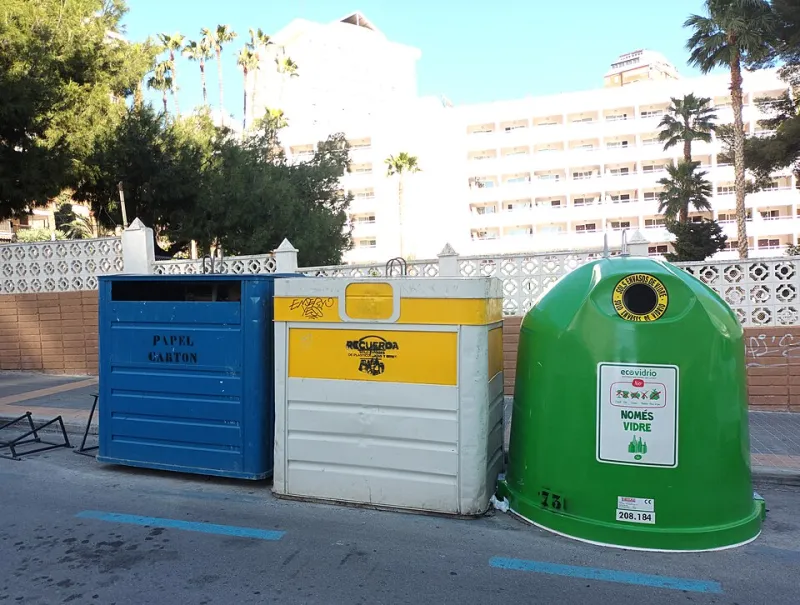
Photo: Acediscovery, CC BY 4.0, via Wikimedia Commons
Somewhere in an advertising archive sits one of the most effective pieces of persuasion ever produced in America, and it doesn't look like persuasion at all. It looks like three arrows chasing each other in a triangle. It looks like a cartoon Native American man crying at a littered highway. It looks like a blue bin.
It looks like your kitchen.
For fifty years, American consumers have been told that the fate of the planet rests on whether they rinse their yogurt cups. We now know, from the industry's own documents, that the people who told us this knew it wasn't true when they said it.
A Crisis Invented by the People Causing It
The story starts in the 1970s, when single-use packaging was exploding and the obvious solution — forcing companies to make less of it, or take it back — was starting to sound politically viable. Beverage container deposit laws were passing in state after state. The packaging industry faced a genuinely existential threat: regulation.
Their response was not to change the product. It was to change the villain. Industry groups, including the ones funded by beverage and plastics companies, poured money into 'Keep America Beautiful,' the campaign that gave us the Crying Indian and the phrase 'People Start Pollution. People Can Stop It.' Note what that sentence does. It takes a system — billions of units of disposable packaging, designed for the landfill by decision-makers — and reassigns the moral weight to the individual holding the wrapper. It is, arguably, the original sin of modern greenwashing: the personal carbon footprint had a corporate godfather, and so did the recycling bin.
Then the plastics industry went further. Internal documents and interviews with former industry insiders, reported by NPR and PBS in their landmark 2020 investigation, revealed that executives knew as early as the 1970s that recycling plastic on a large scale was never going to be economically viable. Sorting it was expensive. Reprocessing it degraded the material. Virgin plastic, made from cheap fossil fuels, would always be cheaper. One industry leader reportedly summed up the situation bluntly: recycling plastic at scale wasn't going to work. The public messaging said otherwise, because the public messaging had a job to do — keep plastic bans off the books.
The Arrows That Meant Nothing
Here's the detail that should make your eye twitch: those chasing arrows stamped on the bottom of your containers? The numbering system they're attached to was created by the plastics industry itself. And the arrows, in their original design, were essentially decorative — the numbers identified resin types for sorting facilities, not a promise of recyclability. The symbol became a global shorthand for 'this is fine, throw it in the bin,' which is precisely the misunderstanding it was built to create.
The result? Decades of Americans dutifully washing, sorting, and bagging plastics while the actual recycling rate for plastic in the United States has never meaningfully crossed single or low double digits — and by some recent estimates has fallen below 10%. Much of what we 'recycled' for years was sold overseas, where it was frequently burned or dumped. The bin wasn't a system. It was a feeling.
The Guilt Was the Product
This is what makes the recycling story the master class in deflection: it didn't just avoid regulation. It generated a half-century of consumer virtue — an entire identity built around sorting — that made people invested in the very system failing them. Tell someone the blue bin is a scam and you're not correcting them. You're attacking their character. That's how good the campaign was.
And the playbook never went away. It's the same move behind every 'Please consider the environment before printing this email' and every app that gamifies your 'sustainable choices' while the company's supply chain does the real damage. Individualize the harm, monetize the guilt, legislate nothing.
So no, don't stop recycling — aluminum and paper genuinely work, and the system we have is worth using. But stop accepting the premise. The problem was never your failure to rinse a takeout container. It was a business model that externalizes its waste onto the public and then bills us for the cleanup, emotionally and literally. Three arrows chasing each other in a circle: that's not a recycling symbol. That's the industry, the government, and the consumer, going round and round while the plastic ships out the door.