Would You Like to Donate Your Money So We Can Keep the Credit? The Checkout Charity Racket, Explained
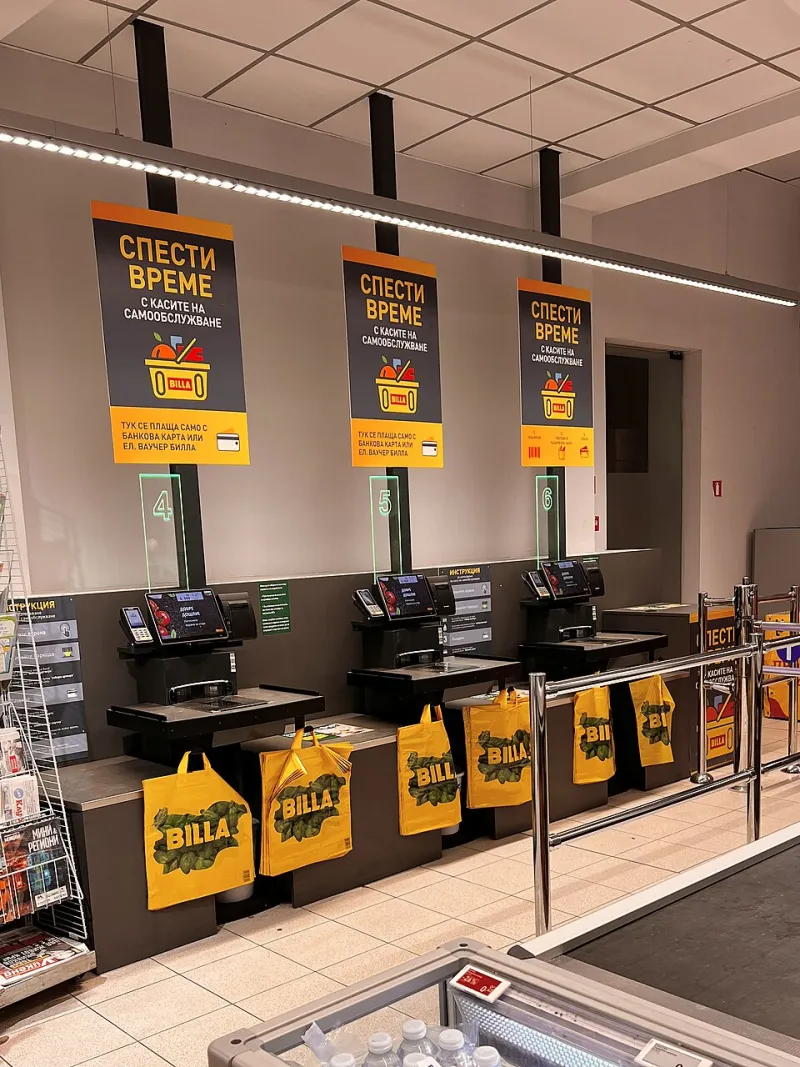
Photo: Bdx, CC0, via Wikimedia Commons
There's a moment of manufactured moral crisis waiting for every American at the checkout screen: Would you like to round up your total to support children's hospitals? You're holding a melting pint of ice cream. There are four people behind you. The cashier is looking somewhere past your shoulder. You press yes.
Congratulations. You've just completed a corporate philanthropy transaction on behalf of a multibillion-dollar company — one that may now use your donation as a talking point, a press release, and in some cases, a line item on a tax form.
The Guilt Booth at Register Two
Let's be clear about what checkout charity actually is: a fundraising operation where the labor is outsourced to low-wage employees and the emotional leverage is outsourced to a cartoon puppy on a screen. The company provides the point of sale. You provide the money. The charity gets a cut. Everybody wins, technically — except the whole arrangement is engineered so that saying no feels like kicking a golden retriever.
And that's the design. Studies on point-of-sale donations consistently show conversion rates that any nonprofit fundraiser would weep over, because the ask arrives at the exact moment social pressure is highest. You're not making a considered charitable decision. You're making one under hostage conditions, in a line, with a debit card already halfway in the reader.
Whose Donation Is It, Anyway?
Here's where it gets interesting. Depending on how the program is structured, the company may collect your donations, hold them, and then hand over a lump sum to the charity — a lump sum the company can then reference in marketing materials, ESG reports, and that warm, fuzzy 'giving back' segment at the annual shareholder meeting. In certain structures, corporate donations to nonprofits are tax-deductible business expenses. Your spare change becomes their good deed, potentially with a tax benefit attached.
Some retailers have gotten savvier, routing programs so the customer technically gets the deduction — a deduction worth exactly nothing to you, because you don't itemize. Nobody itemizes anymore. The tax code quietly decided your $0.37 of generosity doesn't exist, and the companies know it.
Meanwhile, the charity gets a donation with essentially zero fundraising cost attached. That part's real, and it's why nonprofits play along. But notice who never appears in the photo op: you. The person who actually paid is a rounding error. The company gets the halo.
CSR, Now With a Tip Screen
Corporate social responsibility used to require, you know, corporate money. Boards would approve a foundation. Executives would cut a ribbon. Now the entire function has been crowdsourced to customers through a series of increasingly aggressive yes-or-no prompts, while the company's actual tax contributions get optimized down to a science by a building full of accountants in a state with no income tax.
It's philanthropy as a service — and you're the service. The company gets the reputational benefit of 'raising millions for charity' without spending a dime of its own, the employee gets a script to read, and you get a slightly smaller sandwich and a vague sense of virtue.
How to Say No Like an Adult
To be clear: the charities on the other end of these prompts are often legitimate and often need the money. That's the trap. The scam isn't the charity — it's the arrangement.
So here's a radical proposal. Say no at the register. Then take the money you would have rounded up and donate it directly to the charity of your actual choice, where 100% of it arrives, where you get the receipt, and where the CEO of your grocery store doesn't get to stand next to it in a press photo. Charities overwhelmingly prefer direct donations — fewer intermediaries, faster payouts, no marketing department skimming the goodwill.
The checkout prompt isn't a request. It's a transfer of responsibility — from the corporation that created the need for charity to the customer just trying to buy eggs. Press no. Mail the check yourself. Let the company fund its own halo for once.